

Breaking down everything at stake in Seahawks-Rams showdown
Here's what's on the line for the Seattle Seahawks in their showdown against the Rams, including what history says about being a 1-seed instead of a 5-seed.


INGLEWOOD, CALIFORNIA - NOVEMBER 16: Puka Nacua #12 of the Los Angeles Rams takes a hit from Riq Woolen #27, Coby Bryant #8 and Ernest Jones IV #13 of the Seattle Seahawks after his catch during a 21-19 Rams win in the NFL 2025 game between Seattle Seahawks and Los Angeles Rams at SoFi Stadium on November 16, 2025 in Inglewood, California. (Photo by Harry How/Getty Images)
(Photo by Harry How/Getty Images)
The Seattle Seahawks’ NFC West showdown against the Los Angeles Rams on Thursday night at Lumen Field is shaping up to be the franchise’s biggest game in years.
How Seahawks and Rams stack up in NFL power rankings
What’s at stake? Here’s a breakdown of how this titanic clash impacts the NFC West race and the battle for the NFC’s No. 1 seed, plus what it ultimately could mean for each team’s Super Bowl path.
Setting the stage
The Seahawks (11-3) and Rams (11-3) are tied for both the NFC West lead and the NFC’s best record, with L.A. currently holding the head-to-head tiebreaker by virtue of its 21-19 win over Seattle in the teams’ first meeting last month.
The San Francisco 49ers (10-4) are also still very much in the NFC West race, sitting one game back of the Seahawks and Rams with three weeks left in the regular season.
Elsewhere in the NFC, the only other team with 10-plus wins is the NFC North-leading Chicago Bears (10-4).
According to The Athletic’s NFL Playoff Simulator, there’s a 95% chance that the NFC’s No. 1 seed will go to the NFC West winner. The Rams have a 53% chance of claiming the NFC’s top seed, followed by the Seahawks at 29%, the 49ers at 13% and the Bears at 5%.
In short, the NFC West race is also very likely a race for the NFC’s top seed.
The No. 1 seed comes with two major advantages: the conference’s lone first-round bye and home-field advantage through the NFC playoffs. And keep in mind, the NFL’s playoff format awards the conference’s top four seeds to the four division winners, so the best a non-division winner can be seeded is No. 5.
What the odds say
If the Seahawks beat the Rams, their odds of winning the NFC West rise to 55% and their odds of earning the No. 1 seed would surge to 53%, according to The Athletic’s NFL Playoff Simulator.
If the Seahawks lose to the Rams, their odds of winning the NFC West and claiming the No. 1 seed would both plummet to just 2%.
Here’s a closer look at the Seahawks’ NFC West title odds and No. 1 seed odds based on how they fare over their final three games.
• If Seahawks win each of their final 3 games: 100% to win division, 100% to earn No. 1 seed
• If Seahawks beat Rams, lose to Panthers, beat 49ers: 42% to win division, 38% to earn No. 1 seed
• If Seahawks beat Rams, beat Panthers, lose to 49ers: 24% to win division, 21% to earn No. 1 seed
• If Seahawks lose to Rams, beat Panthers, beat 49ers: 5% to win division, 4% to earn No. 1 seed
• If Seahawks lose 2 of their final 3 games: <1% to win division <1% to earn No. 1 seed
Essentially, the Seahawks need to beat the Rams in order to have any realistic shot at winning the NFC West and claiming the No. 1 seed. And more likely than not, the Seahawks would also have to beat the Panthers and 49ers to achieve those two goals.
The difference between the No. 1 and No. 5 seeds
With three of the NFC’s top four teams residing in the NFC West, this is shaping up to be a year where the NFC West winner claims the No. 1 seed and the other two NFC West teams get the No. 5 and No. 6 seeds – due to the NFL’s seeding format that awards the top four seeds to division winners.
That means the NFC West champion may only need to win two home playoff games to reach the Super Bowl, while the division’s second-place and third-place teams would probably have to string together three consecutive road playoff victories to reach the sports’ biggest stage.
So, just how big of a difference has that made over the course of NFL history?
Since 2002, when the NFL adopted its current divisional format, 24 of the 46 No. 1 seeds have reached the Super Bowl. During that same span, just four wild card teams have reached the Super Bowl – the 2005 Steelers, the 2007 Giants, the 2010 Packers and the 2020 Buccaneers. (Ironically, all four of those wild card teams ended up winning the Super Bowl.)
Of course, in many of those instances, the No. 1 seeds that reached the Super Bowl were simply much better than any of the wild-card teams that year.
So, to make things more applicable to the current situation in the NFC West, let’s look at instances where the No. 1 seeds and No. 5 seeds were of comparable quality – and then how those particular teams fared in the playoffs.
Since 2002, there have been 10 instances where the No. 1 seed and the No. 5 seed in the same conference either had the same regular-season record or were within one game of each other.
Of those 10 instances, six of the No. 1 seeds reached the Super Bowl, while none of the No. 5 seeds did.
That includes two instances involving the Seahawks.
In 2013, the Seahawks (13-3) were the NFC’s No. 1 seed and the 49ers (12-4) were the No. 5 seed. And as you surely remember, that ended up giving the Seahawks home-field advantage for the NFC title game, where they prevailed for a dramatic 23-17 win over San Francisco to reach the Super Bowl.
And in 2014, the Seahawks (12-4) were the NFC’s No. 1 seed and the Arizona Cardinals (11-5) were the No. 5 seed. The Seahawks went on to win their second straight NFC title to reach back-to-back Super Bowls, while the Cardinals went on the road and lost to the Panthers in the wild-card round.
So, yes, history says there’s a big difference between the No. 1 seed and the No. 5 seed.
And that only adds to the magnitude of Thursday night’s showdown in Seattle.
Seattle Seahawks coverage
• Voice of the Rams explains the flaw L.A. has recently shown
• Huard: Shaheed will be X-factor for Seattle Seahawks’ stretch run
• Seattle Seahawks Injury Report: LT Cross listed as DNP again
• How injury to Rams star WR could impact clash with Seattle Seahawks
• Another Seattle Seahawks player is challenging an NFL record
Related
 Payton takes over play-calling for Broncos, who host Seahawks next week
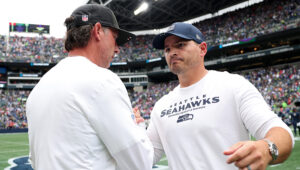 Solak: How Seahawks’ Macdonald has ‘big edge’ over 49ers’ Shanahan
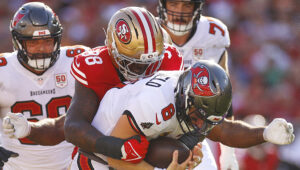 Banged-up 49ers getting key defender back vs Seahawks
 How Seahawks and 49ers stack up in NFL power rankings
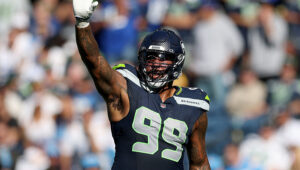 Injury Report: Leonard Williams limited, Seahawks have 2 DNPs
 ESPN’s Super Bowl 61 broadcast to also stream on Disney+

Comments
0 Comments