

Three things from the Seahawks’ loss to Cincinnati
Three things we learned and three things we're still trying to figure out after the Seahawks fell to 2-3 with a 27-24 overtime loss to Cincinnati.

The Seahawks' offense gained just three first downs over its final six possessions against Cincinnati. (AP)
(AP)
If coffee is for closers, the Seahawks were stuck with cocoa after Sunday’s game against Cincinnati. We could count up all the lessons learned from that defeat and still not quite cover everything that went into why Seattle lost its 17-point lead in the fourth quarter.
Recap | Defense assumes blame | Game stats | Photo gallery | Interviews
Three things we learned:
1. Kam Chancellor’s absence wasn’t the only reason Seattle lost late leads.
Chancellor’s holdout was considered a factor in each of Seattle’s first two losses. Well, the presence of the Seahawks’ strong safety didn’t prevent them from losing despite holding a 17-point lead when the fourth quarter started. Bengals tight end Tyler Eifert scored twice on what looked to be the same play, and while no one said whose coverage it should have been, that sure looked like it may have been Chancellor’s assignment. The defense that has allowed the fewest points in the league in each of the past three seasons seems to be missing the killer instinct that Chancellor has embodied so well.
2. There’s a price to Russell Wilson’s improvisational talents.
The Seahawks gained only one first down in the final quarter despite having three third-down chances. Two were third-and-4 and the other was third-and-2. All of those are manageable conversions, and the results were two incompletions as a sack. Throw in overtime, and it was clear just how out of sorts Wilson was in those situations. Hard to blame him given how problematic the pass protection has been at times this season, but the Seahawks absolutely have to find plays – scripted, repeatable plays – that they can go to when they absolutely need a first down. Having Wilson improvise his way out of every jam is no way to run an offense, at least not if you want consistency.
3. Nothing runs like a Rawls Royce.
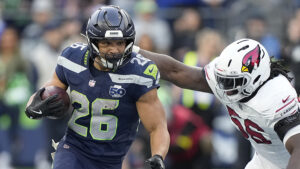
Seattle’s rookie running back has started three games. He has rushed for 100 yards in two of them, and his 169-yard performance against Cincinnati was the most gained by a Seahawk since Shaun Alexander rushed for 201 yards in 2006 during a Monday night game against Green Bay. Curt Warner is the only rookie in franchise history to rush for more yards than Rawls did Sunday, and while it’s still too soon to proclaim Rawls a ready and worthy replacement to Marshawn Lynch, he’s proven that he deserves consideration and some carries going forward.
Three things we’re still trying to figure out:
1. Is Jimmy Graham being wasted?
He wasn’t targeted once after the Seahawks’ first possession of the third quarter. On that drive, Graham caught a 5-yard pass to convert a third down and was the intended receiver when Wilson tried to thread the ball through two defenders only to have it tipped by linebacker Rey Maualuga and picked off by cornerback Adam Jones at the Bengals’ 2. This isn’t about Graham’s blocking or being a complete tight end. Graham is a uniquely talented receiving threat, a guy that you could argue is a top 10 playmaker in the NFL, and yet in the fourth quarter – when the Seahawks needed a first down more than anything – he didn’t get a chance. We know what Graham is. Five years in New Orleans showed what a threat he can be. The Seahawks shouldn’t be asking him to fit what they do in every way so much as shaping plays and calls to fit him.
2. Why is Seattle suddenly vulnerable in the fourth quarter?
Seattle had gone 10 consecutive seasons without losing a game in which it held a double-digit fourth-quarter led, a total of 49 games. Then Seattle let a 10-point lead slip away in the Super Bowl against Tom Brady, and on Sunday in Cincinnati, the Seahawks lost despite leading by 17 points in the fourth quarter. Why is it happening? That’s something that Pete Carroll and his coaches are asking themselves. Was the team tired from having played on Monday night the week before? Does the Seahawks’ reluctance to sell out with the blitz leave them vulnerable to quarterbacks who exercise patience and chip away underneath at their defense? All of those are possible explanations. Each probably has some bearing. Which one can Seattle fix?
3. Did Seattle’s 17-point lead gloss over continued offensive struggles?
Because the temptation is to say that for three quarters, the Seahawks played like the team that they have been the previous three seasons. Except that might not be quite right because the Seahawks’ offense never did score a red-zone touchdown against the Bengals, they got the benefit of a defensive touchdown to pad the lead and Seattle never crossed midfield after Rawls scored with 8:38 left in the third quarter. Seattle gained a total of three first downs over its final six possessions in the game.
Related
 Seahawks-Cardinals Info: TV, announcers, uniforms and series history
 Hall of Fame LB Jack Ham hospitalized ahead of UW-Penn State game
 No. 15 Gonzaga rolls past New Mexico State 109-68
 Sounders beat LAFC 2-1 to clinch playoff spot on Decision Day
 Report gives clarity to Seahawks QB Drew Lock’s injury
 Kraken’s comeback bid falls short in 4-3 loss to Rangers
Comments
0 Comments